

Alcúdia, discover the ancient capital of Mallorca
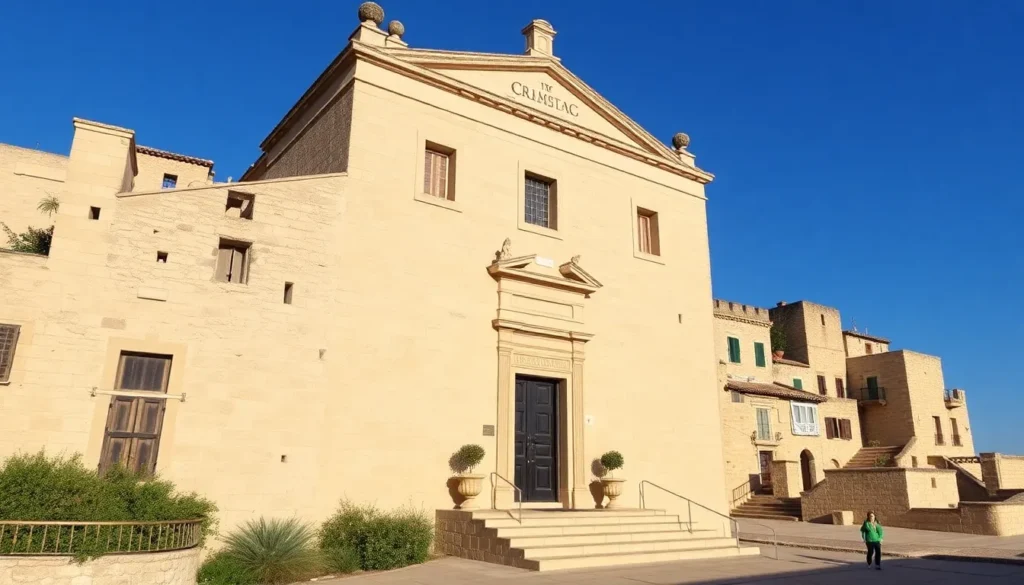
Church of Sant Jaume
It is an imposing temple dedicated to the patron saint of Alcúdia dating back to the 14th century. However, a collapse in 1807 left it heavily damaged. Fortunately, it was reconstructed, and the new works gave it the neogothic style it currently possesses.
Upon contemplating the facade, you will be struck by the large rose window and the image of St. James presiding over the portico. In addition to admiring the exterior, you can visit the interior. Inside, you will discover the sacred museum and the Chapel of the Holy Christ.
Walls and gates
One of the characteristics of Alcúdia is its medieval wall, 6 meters high, which extends around its perimeter. It was ordered to be built by King James II back in the 14th century, although you should know that it was later expanded. It consists of about 26 watchtowers, crucial for safeguarding the city from the feared pirates that sailed the Mediterranean. If you visit Alcúdia, you cannot leave without touring the wall and enjoying the views of the entire city.
The wall also has various accesses that allowed entry into the fortress and are worth visiting:
- Porta de Mallorca or Porta de Sant Sebastià. You will be impressed by the defense towers that rise on both sides.
- Porta del Moll or de Xara. Like in the previous case, two towers frame the entrance to the interior to offer an unforgettable sight. Furthermore, it preserves the original access to the city. Very close to there, on Mare de Déu de la Victòria promenade, a popular market takes place every Tuesday and Sunday.
The port
It is one of the most popular areas among tourists on the island. It’s not surprising considering the number of hotels, shops, and bars that abound there. Besides taking walks, a good idea to enjoy the Mediterranean is to take a boat tour to explore all the charms of the bay and its surroundings.
Beaches
As expected, this coastal city offers wonderful beaches, some with fine sand and others with stones and pebbles. Playa del Muro, Playa de S`illot, Sant Joan, or Coll Baix are some of them.
Apart from relaxing under the sun and taking dips, they are ideal places for activities such as snorkeling. They have crystal-clear waters and an exciting marine life.
Pollentia
Through the Porta de Mallorca, you can leave the walled enclosure and find the most important Roman archaeological site in Mallorca. It is the Roman city of Pollentia, the Roman capital of the Balearic Islands founded in 123 BC. Among the ruins of the city, an amphitheater carved into rock, a colonnaded street, and three domus are preserved.