

Flamenco in La Latina: Your Guide to 7 Unforgettable Encounters with Historic Tablaos, Artisan Guitars, and Deep Song
Table of Contents
Introduction: La Latina and the Heartbeat of Flamenco in Madrid.
In mid-September, as the summer heat gives way to the mild evenings of early autumn, the La Latina neighborhood unveils one of its most intense and universal cultural facets: its deep connection to the art of flamenco (arte jondo). If you’re looking to immerse yourself in authentic flamenco in La Latina, this corner of Madrid’s historic center offers an irreplaceable musical legacy that combines legendary venues, award-winning gastronomy, and traditional clubs. Exploring flamenco in La Latina will allow you to delve into the poetic and passionate soul of a discipline declared Intangible Cultural Heritage of Humanity.
The ancient medieval layout of La Morería and the neighborhood’s cobbled squares were once home to dancers (bailaores), singers (cantaores), and guitarists who turned the capital into the undisputed mecca of Andalusian art. Attending a flamenco show in La Latina offers a sensory experience that overwhelms with its acoustic intimacy, the purity of the footwork (zapateado), and the improvisation of the flamenco troupes. Those who come to witness flamenco in La Latina discover an enveloping nocturnal atmosphere where the emotion of the singing perfectly connects with the bohemian life of its taverns.
In this comprehensive guide, we present the essential keys to experiencing the best flamenco in La Latina with complete comfort, freedom, and emotion.
Corral de la Morería: The World’s Most Famous Tablao.
The undisputed epicenter of flamenco in La Latina is located at Calle de la Morería, 17, home to the legendary Corral de la Morería.
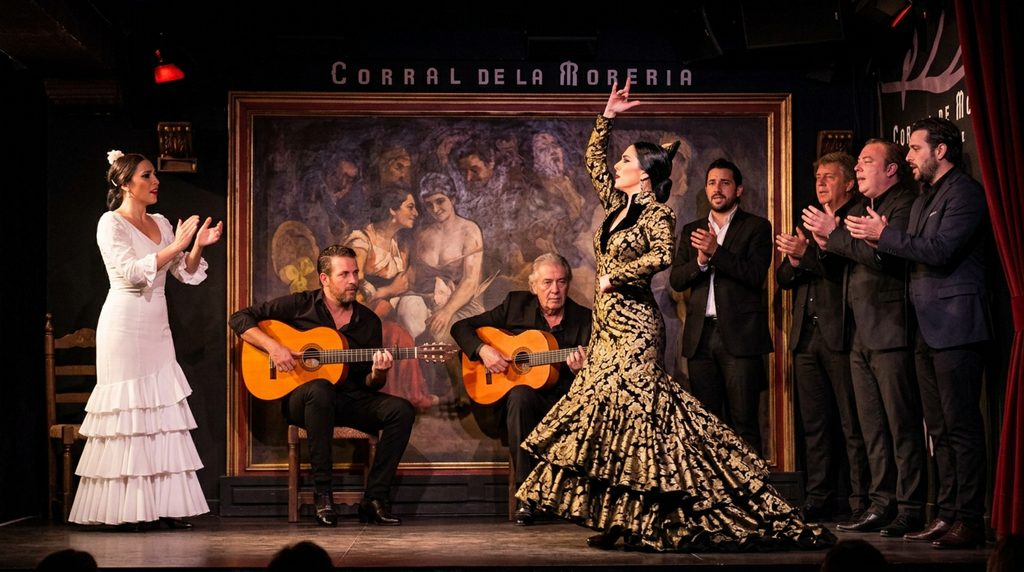
Opened in 1956 by Manuel del Rey, this emblematic flamenco temple in La Latina is considered by international critics and the New York Times’ 1,000 Places to See Before You Die as the most prestigious tablao on the planet. Its stage has hosted unforgettable legends such as Pastora Imperio, Antonio Gades, Blanca del Rey, and Paco de Lucía, maintaining the standard of flamenco in La Latina at a global peak. In addition to its exceptional artistic ensemble, the venue boasts a Michelin star and three Repsol Suns, making a flamenco evening in La Latina a perfect pairing of haute cuisine and gypsy dance.
Witnessing the famous “soleá del mantón” in this historic tablao solidifies flamenco in La Latina as an unforgettable theatrical experience.
The culinary experience at Corral de la Morería deserves a special mention within the European gastronomic scene. Under the direction of chef David García, the tablao’s restaurant offers haute cuisine tasting menus inspired by Basque-Castilian traditions, featuring rich reductions, wild Cantabrian fish, and seasonal mushrooms, paired with one of the world’s largest and most exclusive cellars of fortified wines and centuries-old sherries. Dining in an intimate setting while, just meters away, the power of an a cappella martinete unfolds, creates a multisensory impact that elevates the capital to an incomparable level of cultural sophistication.
Historic Taverns with Deep Song and Guitar in Cava Baja.
Beyond the grand formal stages, the centuries-old taverns of Cava Baja and Calle Calatrava keep the more spontaneous side of flamenco in La Latina alive.
Small venues with brick vaults and walls adorned with vintage bullfighting posters schedule acoustic guitar and deep song (cante) performances as night falls. Enjoying this intimate format of flamenco in La Latina allows spectators to feel the vibration of the guitar strings and the rhythm of the hand-clapping just inches from the bar. Aficionados who shy away from mass tourism circuits value this flamenco in La Latina for its sincerity, improvisation, and street ‘duende’ (soul).
Pairing these recitals with a glass of Fino wine or Manzanilla from Sanlúcar perfectly complements the experience of flamenco in La Latina.
The urban layout of Madrid’s Morería itself adds a particular historical resonance to these evenings. Established after the Christian conquest of the town in the 11th century as the quarter where the Muslim population continued to reside, this labyrinth of narrow slopes and whitewashed walls preserved for centuries a constant exchange between North African musical traditions, Sephardic chants, and Castilian peasant rhythms. With the arrival of gypsy families in the 18th and 19th centuries, this riverside enclave consolidated as a melting pot of harmonic cross-breeding that nurtured the first tonás, martinetes, and deblas that would later define the formal structure of cante jondo.
The Legacy of 19th-Century ‘Cafés Cantantes’ in Cascorro.
To understand the significance of flamenco in La Latina, it’s essential to recall the crucial role played by the ‘cafés cantantes’ (singing cafés) around Plaza de Cascorro during the 19th century.
In these historic venues, singing and dancing moved from private parties to professional performances for the general Madrid public, cementing the success of flamenco in La Latina. Although many of those old cafés disappeared, cultural spaces like Off Latina and chamber venues on Calle San Cayetano now capture that bohemian spirit with experimental flamenco programming in La Latina. Understanding this historical evolution provides an enriching perspective for those who wish to delve deeper into the roots of flamenco in La Latina.
The dialogue between Castilian folklore and Andalusian art flourished powerfully in these cafés, becoming a pillar of flamenco in La Latina.
Traditional Luthier Workshops: Spanish Guitars on Calle Toledo.
The art of guitar playing would not be possible without the meticulous work of the master luthiers who work in the vicinity of La Latina, providing the sonic tools for flamenco in La Latina.
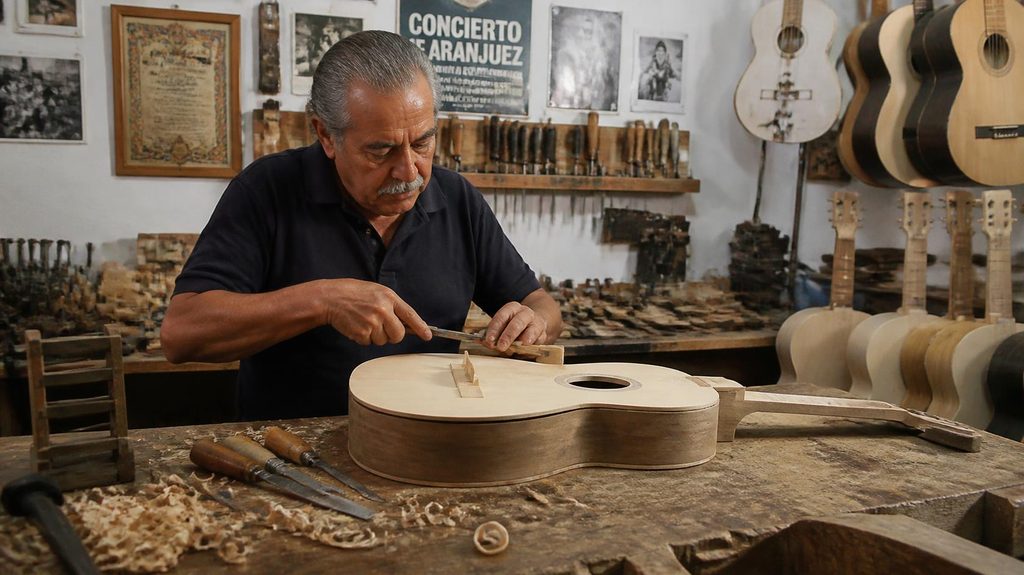
Centuries-old guitar workshops on Calle Toledo and Cuesta de los Ciegos continue to craft instruments by hand using noble woods such as royal cypress, rosewood, and German spruce. Visiting these flamenco workshops in La Latina allows one to appreciate the painstaking process of French polishing (barnizado a muñequilla) and acoustic calibration that gives each flamenco guitar its brilliant and percussive timbre. International guitarists come to these workshops to commission the pieces that will bring flamenco in La Latina to life.
The scent of cedar and hot glue in these traditional workshops is part of the sensory landscape of flamenco in La Latina.
In the traditional shops on Calle Toledo and Plaza de Cascorro, flamenco attire maintains its presence through centuries-old stores that hand-embroider Manila shawls in natural silk, make tortoiseshell combs, ebony castanets, and dance shoes with nails reinforcing the toe and heel. Visiting these family workshops allows lovers of traditional fashion to appreciate the care required to create a shawl with artisan knotted fringes, a piece of clothing that has become the most universal visual symbol of Madrilenian and Andalusian elegance on stage.
Late-Night Tapas Routes and Post-Show Gatherings.
The flamenco night in the historic center doesn’t end when the stage lights dim; it extends into gatherings that celebrate flamenco in La Latina.
After the evening performances, dancers and spectators mingle in the taverns of Plaza de la Paja and Puerta de Moros to discuss the best ‘desplantes’ (flamenco gestures) of flamenco in La Latina. Savoring portions of acorn-fed Iberian ham, cured Manchego cheese, or stewed oxtail while debating the purity of a ‘seguiriya’ is the favorite ritual after experiencing flamenco in La Latina. Traditional taverns with historic tilework offer the perfect refuge to extend the night to the rhythm of flamenco in La Latina.
This lively neighborhood coexistence demonstrates that the spirit of ‘cante jondo’ is part of the daily life of the district.
Practical Guide to Urban Mobility in the City Center.
The city center district prioritizes pedestrian movement and efficient public transport under the Low Emission Zone regulation. Knowing the connections makes it easier to attend flamenco shows in La Latina.
| Transport / Service | Recommended Options | Benefits for Enjoying Flamenco in La Latina |
| Madrid Metro | La Latina Station (L5). Nearby: Tirso de Molina (L1) and Ópera (L2, L5, Ramal). | Direct access to flamenco tablaos in La Latina. |
| City Buses (EMT) | Lines 17, 18, 23, 31, 35, 60 and 148. | Comfortable travel before the flamenco show in La Latina. |
| Walking | Cobbled streets of La Morería and Cava Baja. | The best way to soak in the atmosphere of flamenco in La Latina. |
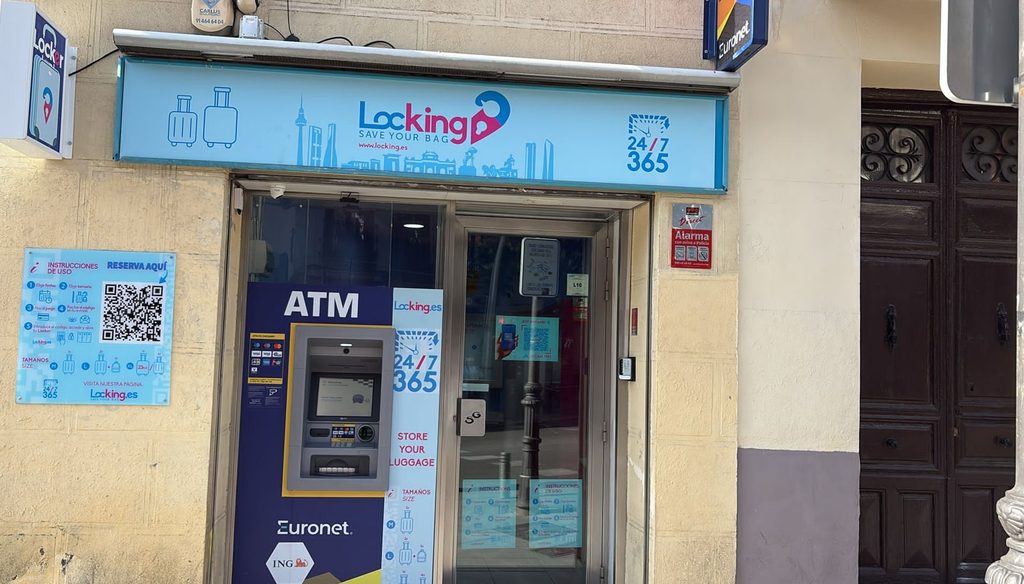
| Smart Luggage Storage | Locking La Latina (24/7 Service). | Maximum physical freedom to experience flamenco in La Latina. |
Walking through the narrow streets illuminated by ‘fernandina’ lampposts is the most romantic way to attend a musical evening in the historic center.
Conclusion: Experience Flamenco in La Latina Hassle-Free with Locking.
Attending a tablao night, entering intimate singing venues, dining in a historic bodega, or strolling through cobbled alleys requires complete elegance and ease. To fully enjoy flamenco in La Latina, carrying heavy suitcases, work backpacks, or travel bags is inconvenient, in addition to being strictly restricted by access rules to performance venues.
So that your only focus is to be swept away by the emotion and ‘duende’ of flamenco in La Latina, Locking offers you the leading network of automatic lockers and smart luggage storage facilities in central Madrid. Our facilities are strategically located just a few meters from La Latina Metro station and Plaza de la Cebada, allowing you to book your space 100% digitally, quickly, and securely in under 30 seconds.
If you’re visiting the capital for a musical weekend or have a few free hours before your return journey after a night out, we recommend you book your luggage storage in La Latina with Locking, leave your belongings in a secure space, and experience all the magic and passion of flamenco in La Latina with absolute freedom and lightness!